

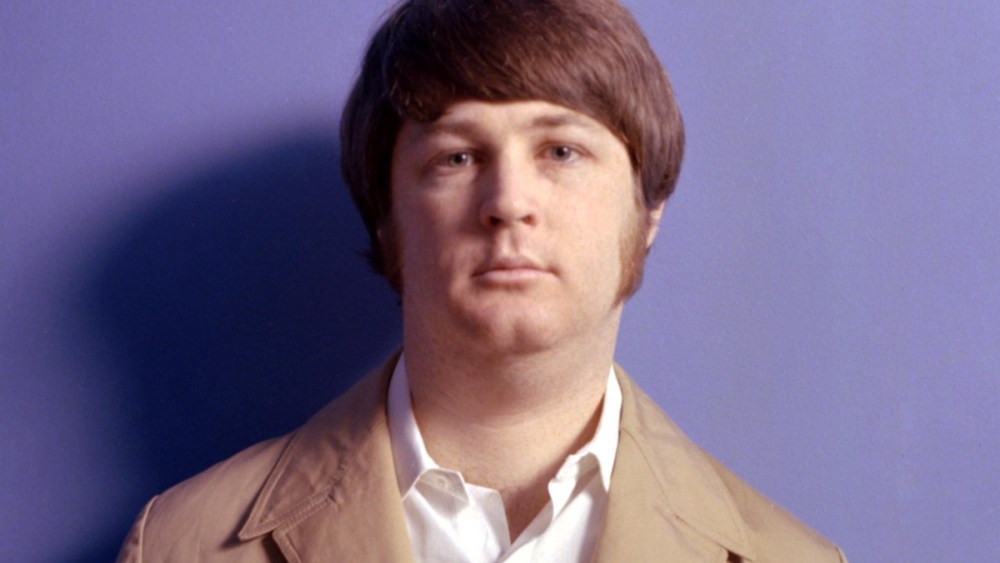
I’ll always remember the primary time Brian Wilson made me see God. It was 1973, and I used to be sitting within the principally empty balcony of a second-run movie show lastly watching “American Graffiti,” the film everybody in my highschool was speaking about. I favored the movie okay, however it didn’t make that a lot of an impression on me. I couldn’t have been much less concerned with what I derisively considered, on the time, as “the ’50s.” (To me, songs like “On the Hop” and “That’ll Be the Day” had been corny and uninteresting.) However on the finish of the film, because the now-famous what-happened-to-them-after-graduation epilogue got here on, a tune began to play that had a complete totally different taste. It woke me proper up. If I’m sincere about it, what hooked me — the very first thing in my life that made me a Brian Wilson believer — was a single chord change, the one which occurred on the phrase “home.” As in, “Sittin’ in my automotive exterior your HOUSE…”
Because the Seaside Boys sang “home,” the tune, “All Summer season Lengthy,” didn’t simply change chords — in a luscious instantaneous, it ascended to a better place. One other wave of voices flooded in, however it was the revelation of that chord that was the hook, the spice, the factor that made me soften.
It’s onerous to speak about music, in regards to the movement of chords and melodies and preparations, while you’re speaking a few pop tune, as a result of it might all sound a little bit technical and summary. However these mystic combos of notes are the true coronary heart of what we reply to in music. And Brian Wilson was the transcendent maestro of sonic magic. The title of the Seaside Boys’ biggest album is “Pet Sounds,” and pet sounds is what Brian constructed into nearly each tune he ever wrote. It was these sounds that lifted you into the sunshine.
To me, it’s removed from incidental that Brian Wilson was the primary pop musician of the ’60s to convey the phrase “God” into the equation. It was the primary phrase of the title of “God Solely Is aware of,” which I might argue is his biggest tune, although that title wasn’t simply an expression that Brian was utilizing. The tune’s implicit assertion was, “God solely is aware of what I’d be with out you…as a result of it’s God who is aware of what I’m after I’m with you.” This was not only a love tune. It was a prayer.
In the previous couple of days, as so many eloquent phrases have been written about Brian Wilson, I used to be struck by a line in Chris Willman’s lovely tribute to Brian’s 20 biggest songs. Chris wrote, “Even his most sorrowful songs — and there have been loads of these, for these days when even California couldn’t really feel the heat of the solar — had a means of hitting the joy-spot within the mind.” The enjoyment-spot within the mind is an ideal description of the place inside you that receives music. However when music hits that spot and offers you that ping, is pleasure the essence of it? The totality of it? Concord creates ecstasy, however I believe there’s one other feeling that’s linked to pleasure, and the phrase I’d use for that’s religion. Brian Wilson created sounds chic sufficient to carry onto and imagine in.
It’s not like that’s a radical concept. It could sound goofy to say that after I was a young person watching “American Graffiti,” I heard God in a chord change, however the fact is that individuals have all the time heard God in chord adjustments.
As a composer, Brian drew inspiration from two totally different traditions. The Seaside Boys began out as all-American rock ‘n’ rollers, and rock ‘n’ roll got here of age of within the Black church. It was a fusion of the blues and gospel, and also you’d higher imagine that that music was designed to stoke your spirit and raise you larger.
However Brian additionally drew from the custom of Western classical music, which he fused with rock ‘n’ roll. Classical music reaches again many centuries, however the big determine who did greater than anybody to launch what we consider because the classical canon was Johann Sebastian Bach. Brian wrote numerous songs that had been Bach-like, particularly a tune that’s one among my very favorites: “Fantastic,” which comes at you (on the harpsichord!) with such a wierd twisty winding chromatic melody that it’s just like the sound of Brian shedding his thoughts and discovering his perception on the similar time.
However my level isn’t simply that “Fantastic” appears like Bach on acid. It’s that the majority of J.S. Bach’s music was written to God. For a whole lot of years (I might argue for many of civilization), music has been used, fairly explicitly, because the bridge to God, the conduit to spiritual feeling, the majestic device designed to provide us entry to these larger emotions. You went to church and heard a Bach chorale, and that was introduced because the sound of God (or, not less than, as shut as you had been going to return to listening to it). That is no conceit; that is the way it labored. (It labored that means within the gospel church as nicely.)
Pop music is all of that with the non secular trappings stripped away. Most of us don’t hearken to pop music in a church or synagogue or mosque. We don’t maintain open hymn books as we sing together with it. We don’t name pop music non secular. However that’s the non secular root of nice pop. It’s the sound that hits your joy-spot and, in doing so, hits your faith-spot, revealing the hidden majesty of what life is.
In faculty, after I found “Pet Sounds,” I might get stoned and hearken to it, and as these extraordinary melodies and preparations washed over me, I felt like I used to be being baptized in these songs. They had been so lovely that I might really feel them rewiring my interior chemistry. In a world the place this sort of magnificence existed, how might one not imagine? How might one not imagine within the wistful dream of “Wouldn’t It’s Good”? Within the devotion expressed within the lyrics and harmonies of “You Nonetheless Consider in Me” or “Don’t Speak (Put Your Head on My Shoulder)”? Or within the romantic enchantment of “God Solely Is aware of”?
Anybody who doesn’t suppose that pop music is non secular ought to contemplate the next 5 songs, which in my ebook are the best 5 pop songs of the twentieth century: “God Solely Is aware of,” “Penny Lane,” “Climb Each Mountain,” “I Say a Little Prayer,” and “Ain’t No Mountain Excessive Sufficient.” These are songs that will humble Johann Sebastian Bach. They’re in regards to the glory of affection, in regards to the transcendence of on a regular basis life, about hope and devotion and perseverance. In a phrase, they’re about religion. And let’s be clear: This impulse isn’t restricted to artists like Brian Wilson and Paul McCartney and Richard Rodgers and Burt Bacharach and Nickolas Ashford and Valerie Simpson. As I’m scripting this column, I’m sitting in a espresso store listening to “Pink Pony Membership” by Chappell Roan, and that, too, is a tune about religion. (There are such a lot of hundreds of others.)
However Brian Wilson was the excessive priest of pop music because the incarnation of non secular feeling. All of us have our favourite Brian Wilson songs, those that produce a specific swoon. Other than each final monitor on “Pet Sounds,” together with the early classics (my favourite: “Don’t Fear Child”), there may be, for me, the bracing bliss of “Darlin’,” the luxurious incandescence of “‘Til I Die,” the momentous sundown melancholy of “Sail On, Sailor.” However the Brian Wilson tune that will imply probably the most to me is one which confirmed me religion after I wanted it most.
I used to be at a crossroads, a rip in my soul, over the query of whether or not I needed to have kids. I didn’t know; I used to be on the fence. And I acted this out in a non-public misplaced weekend that occurred on Thanksgiving Day, which I used to be celebrating all on my own. I purchased two bottles of wine, which I started to devour in the midst of the afternoon. I had gotten the stuff to make Thanksgiving dinner. I had additionally purchased a CD of an album that had been not too long ago launched, although it was one I’d been dreaming of listening to for 30 years: “Brian Wilson Presents Smile.” I used to be, in the end, going to listen to it that day.
I placed on the CD, and was possessed from the opening moments. It was the whole lot I’d needed it to be, a form of grand outpouring of songcraft and emotion. About quarter-hour in, the tune “Fantastic” got here on (which I knew from “Smiley Smile”), and it sounded extra surprisingly splendid than ever. Nevertheless it was adopted by one thing I’d by no means heard earlier than. A tune that consisted of attractive percussive chords, with a rapturous contrapuntal overlay of voices, and it was so haunting that it stopped me in my tracks. I assumed it was probably the most lovely factor I’d ever heard. And proper then, listening to it, I started to cry. The tune lasted for perhaps two minutes. And when it was over, I used to be modified. One thing had shifted inside me. I knew that I needed to have kids. I picked up the CD to take a look at the title of the tune.
It was referred to as “Track for Youngsters.”
It wasn’t the primary time, and wouldn’t be the final, that Brian Wilson confirmed me the sunshine.
The post Brian Wilson Was the Surest Signal We’ll Get That Pop Music Is Non secular appeared first on Allcelbrities.