
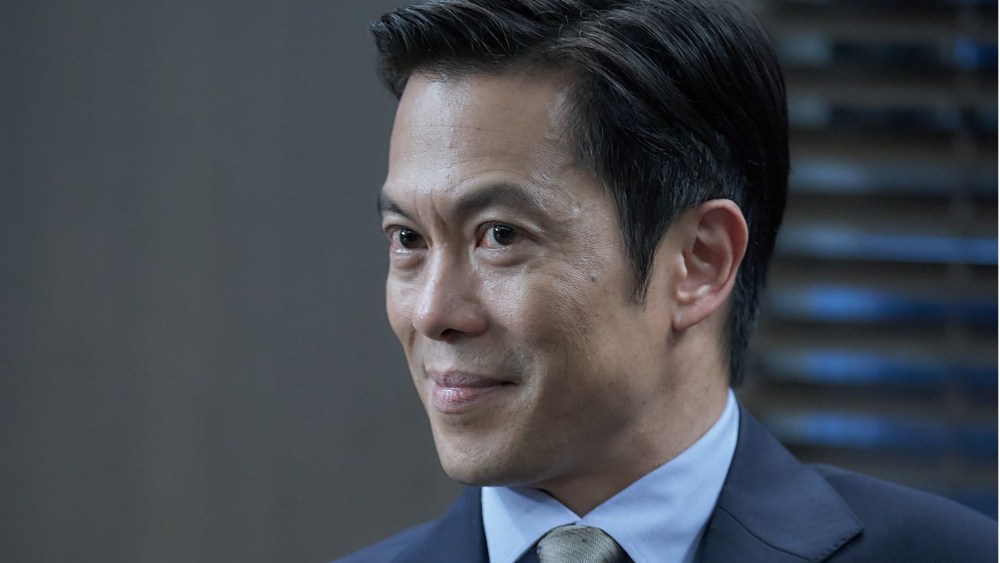
Byron Mann‘s debut in Korean cinema has confirmed that cross-cultural casting can repay on the field workplace.
The actor’s new movie “Massive Deal” opened at No. 3 in South Korea, touchdown simply behind “Mission: Unattainable – The Last Reckoning” in a aggressive market.
For Mann, whose credit span from Adam McKay’s “The Massive Quick” to Netflix’s “Altered Carbon” and productions throughout Asia together with the Hong Kong-set romantic comedy “The Modelizer,” the Korean movie marked a singular expertise that required him to fully overhaul his character’s dialogue whereas navigating an unfamiliar manufacturing system.
“After they reached out to me, I truly thought they made a mistake,” Mann tells Selection. “I believed, ‘You understand they know I don’t converse Korean, proper? I imply, they know I’m not Korean both, proper?’”
The confusion cleared up as soon as Mann and his supervisor learn the script. His character in “Massive Deal” is an funding banker from New York and Hong Kong in a narrative loosely primarily based on actual occasions involving one in all Korea’s largest soju firms in 2003. The director had seen Mann’s work in “The Massive Quick” and felt he was proper for the function.
Mann’s first main contribution to the manufacturing was intensive script work. Having labored throughout Asia in Thailand, mainland China, Hong Kong, and Indonesia, he acknowledged the frequent pitfalls of translated dialogue.
“Often once you translate like that, you lose lots of that means, you lose lots of juice, and to start with, the dialogue doesn’t sound correct,” Mann explains. “I believe I needed to work for a month, like daily, to work with the manufacturing, the director, producer.”
The method concerned understanding the Korean workforce’s intentions for every scene and line, then translating these ideas into pure English vernacular particular to how an funding banker would converse. “Each line, each scene, I needed to to start with perceive what they have been pondering. Then I needed to translate it, spit it out in English.”
The trouble paid off. After seeing the completed movie in Korea, Mann says he’s “very happy” with how the English dialogue flows naturally, including that it’ll assist the movie resonate when it travels to English-speaking markets.
Working inside Korea’s manufacturing system revealed fascinating variations from Hollywood practices. On his first evening in Seoul, Mann acquired what he initially thought was a Japanese manga ebook however turned out to be detailed storyboards for the whole movie.
“Halfway by way of the shoot, I spotted that they’re truly taking pictures actually based on the storyboard within the ebook, body by body,” Mann recollects. The follow, he realized, has grow to be customary in Korean filmmaking over the previous 8-10 years, with studios now requiring storyboards for greenlight approval.
Trying ahead, Mann sees important shifts within the business panorama, notably in how streaming platforms method content material. “You’ll be able to see the streamers, notably Netflix, notice that the world is larger than simply America,” he observes. “I believe they spend extra assets on the remainder of the world than in america.”
Publish-pandemic price pressures following the writers’ and actors’ strikes have made Asian productions more and more enticing to studios looking for effectivity. “The price of making a sequence goes to be lots cheaper than what you make within the U.S., and when you’re in a position to inform an equally thrilling story in Asia, that’s most likely the best way to go.”
This financial actuality aligns with Mann’s latest profession concentrate on what he calls “Hollywood movies that happen in Asia.” He not too long ago accomplished “The Modelizer,” a romantic comedy shot solely in Hong Kong, and has a number of related tasks in improvement.
Having labored with administrators starting from Adam McKay to numerous Asian filmmakers, Mann has noticed distinct cultural approaches to efficiency and manufacturing. “Adam McKay may be very free and improvisational,” he notes, whereas Asian administrators usually emphasize motion and “somewhat bit extra posturing.”
Western administrators, Mann suggests, are likely to count on actors to reach totally ready with homework accomplished for the whole undertaking, whereas some Asian productions permit for extra flexibility and star enter throughout filming.
Mann is making ready to announce his subsequent undertaking. In the meantime, his accomplished motion thriller “Kill Him ‘Til He’s Useless” is in post-production for a later 2025 launch. The movie options Mann in seven totally different roles, which he describes as “very groundbreaking” and “enjoyable.”
His present focus continues to heart on “telling tales that occur in Asia, or Asian tales, and infusing it with Hollywood experience.”
“Massive Deal” is at present on launch within the U.S., Canada and Korea.
The post Byron Mann on Korean Cinema Debut ‘Massive Deal’ and East-West Filmmaking appeared first on Allcelbrities.