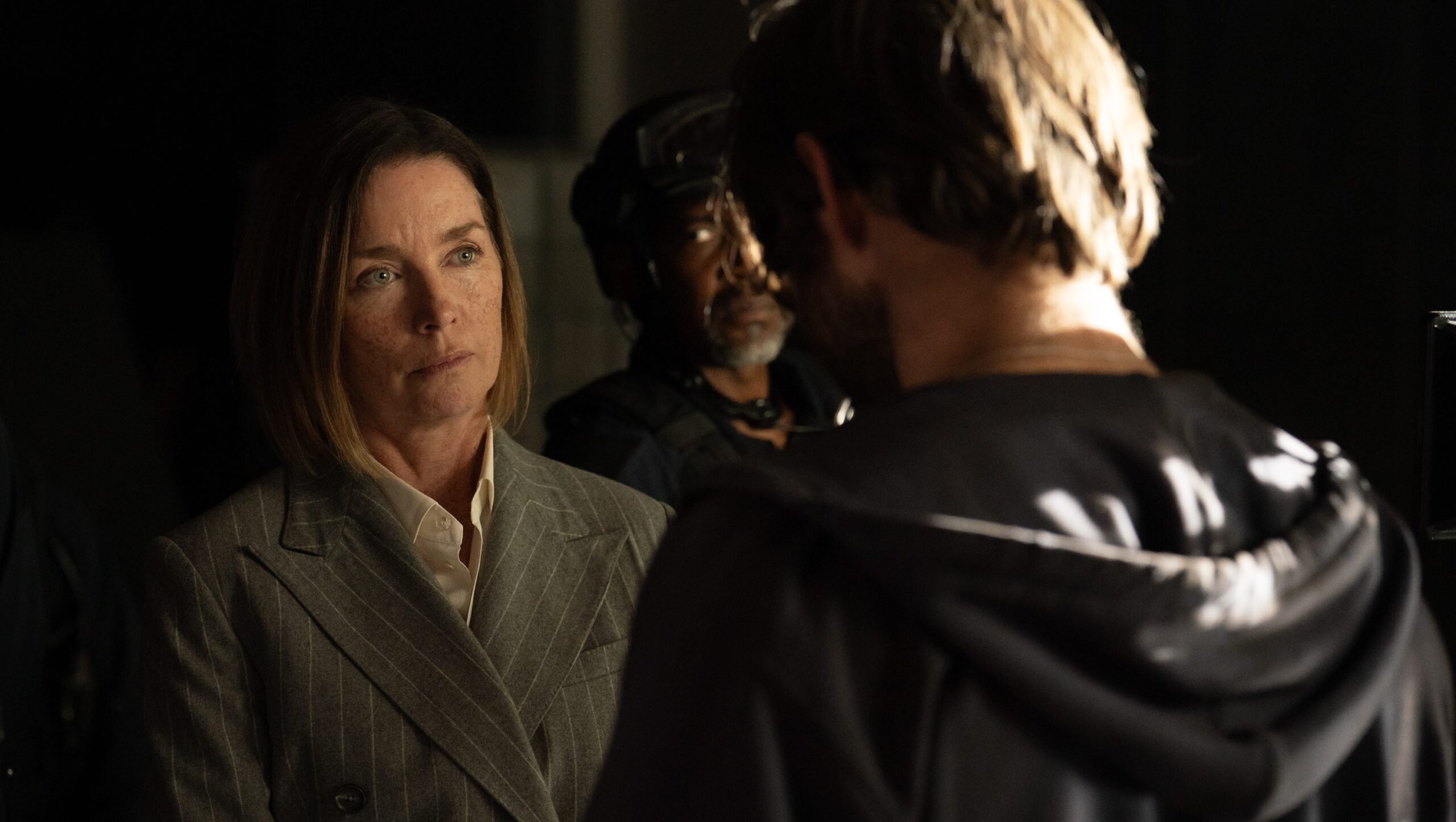

Catalan filmmaker Pere Vilà Barceló talks about rape in “When a River Turns into the Sea.” However he by no means, ever meant to indicate it.
“We’re specializing in trauma and the method of therapeutic. It’s a protracted and complicated journey that many ladies shared with us in nice element – typically much more so than the assault itself,” he tells Selection.
Premiering at Karlovy Fluctuate Movie Pageant, his intimate drama is about “moments that don’t seem in information headlines,” he explains.
“It explores the margins of the emotional, psychological and social aftermath that usually stays invisible. For us, this wasn’t solely a cinematic selection. It was a matter of respect.”
He provides: “We even shot a courtroom scene however selected to go away it out to keep away from re-victimization and any sense of voyeurism or sensationalism. Many survivors describe the judicial course of as a second assault, since they usually face institutional violence as nicely. Being doubted, retraumatized or handled with out sensitivity.”
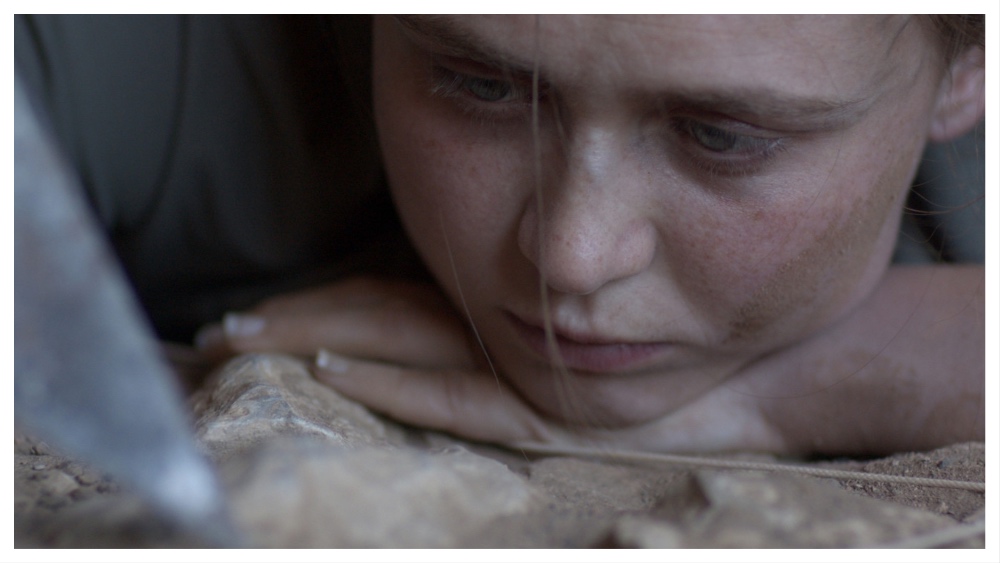
That’s what occurs to Gaia as nicely. The younger archaeology scholar – performed by Claud Hernández – is unable to discuss what occurred to her for the longest time. When she lastly reveals her boyfriend assaulted her, she’s met with doubt and dismissal.
“It’s one thing I’ve heard repeatedly. Victims are doubted, remoted and dismissed, whereas the aggressor goes on along with his life as if nothing occurred, with out even being totally conscious of the hurt he has triggered,” observes the director.
“This factors to an absence of schooling, and to the truth that each women and men are raised inside a patriarchal society. That’s additionally why I wished to introduce this archaeological idea – not simply as a metaphor, however as a scientific and evolutionary method. The professor explores historic roots of patriarchy: when did it start, how did it take form and who enforced it?”
Produced by Xavier Pérez Díaz for Fromzerocinema, “When a River Turns into the Sea” is “not only a movie,” says Vilà Barceló, however a challenge “rooted in social activism and consciousness.” One which allowed him to attach with a number of associations of survivors of gender-based violence.
“These collaborations have helped us carry visibility to their voices and their message,” he says, mentioning testimonies of greater than 100 ladies who’ve skilled bodily and psychological violence, in addition to insights from psychologists specialised within the area.
“I’m additionally engaged on a collection of documentary items, together with interviews and experiences, that – along with the movie – can function academic and pedagogical instruments to foster reflection and consciousness.”
The entire challenge began eight years in the past, when he was main a filmmaking workshop at a highschool in his hometown.
“When it got here to resolve the topic of the quick movie the scholars would make, somebody urged addressing sexual abuse. Among the younger women – simply 14 or 15 years outdated – started to share private experiences of abuse they’d gone by way of. It deeply affected me.”
He wished to raised perceive the problem.
“I began conducting interviews with the survivors of all ages. It has not solely modified the way in which I see the world; it has modified me, profoundly. As an individual, as a filmmaker, I carry these tales with me.”
At one level within the movie, determined and confused, Gaia wonders: “Is it at all times going to be like this?”
“It’s not only a second of despair – it’s a second of disorientation. She now not acknowledges herself. She doesn’t perceive the particular person she has turn out to be, or why somebody, in opposition to her will, has pressured this variation upon her,” he says concerning the scene.
“I bear in mind one interview with a 14-year-old woman who gave a strong description of how she felt. She stated: ‘It’s like somebody unzipped me, took every thing out, scrambled all of it up, then stuffed all of it again inside and zipped me up once more.’ When Gaia asks that query, what she’s actually asking is: ‘Will I ever return to who I used to be?’ And sadly, the reply isn’t any.”
As a substitute, she’ll undergo a painful course of that’ll “lead her to turn out to be another person, with a deeper understanding of herself.” And he or she’ll do it with the assistance of her father (Àlex Brendemühl), despite the fact that he feels helpless at first.
“Her father finds himself unable to speak with somebody he’s recognized because the day she was born. He has no concept learn how to attain her. She enters a brand new emotional code that neither he, nor the general public round her, are outfitted to grasp. They haven’t been taught learn how to course of or acknowledge sure feelings.”
Vilà Barceló couldn’t ignore the truth that sexual violence additionally “profoundly impacts the fathers, brothers and companions of many ladies.”
“That’s why it felt important to give attention to his ongoing effort, his wrestle to grasp one thing that, to him, was unimaginable,” he notes, meaning to painting the type of masculinity “that’s not poisonous, however compassionate.”
“Most individuals usually are not ready, or typically not even keen, to face conditions just like the one portrayed within the movie. Her father, regardless of not having that emotional schooling, chooses to look immediately at his daughter and keep by her facet. His presence is quiet, however for me, that’s a strong gesture.”
He says: “Males additionally must be part of the wrestle for equality and that begins with caring for the folks we love. This is a matter that ought to have an effect on all of us, no matter gender.”
The post Pere Vilà Barceló Tackles Rape in ‘When a River Turns into the Sea’ appeared first on Allcelbrities.