
In 1982, a wordless documentary by Godfrey Reggio, that includes music by Philip Glass, took the world by storm. Over 40 years later, it’s nonetheless not forgotten – actually not by Ukrainian director Dmytro Hreshko, now behind “Divia.”
“Once I first met Dmytro, what struck me was the sincerity and purity in his strategy to documentary filmmaking: no pretentiousness, simply uncooked remark and trustworthy intent. I requested him: ‘Do you wish to make this movie Hollywood-style?’ He replied: ‘No, I’ll do it the ‘Koyaanisqatsi’ method,” says producer Glib Lukianets.
Hreshko provides: “It wasn’t simply ‘Koyaanisqachi.’”
“It was ‘Baraka’ [by Ron Fricke], ‘Workingman’s Dying’ by Michael Glawogger, Jóhann Jóhannsson’s ‘Final and First Man.’ Their strategy touched me, after which I noticed ‘Berg’ by Joke Olthaar. At first, all you discover are these nice mountain photographs. They appear nice, however after some time, you begin to assume: ‘What does it imply?!’ It’s not fast-paced cinema, however I discovered this expertise to be very interactive.”
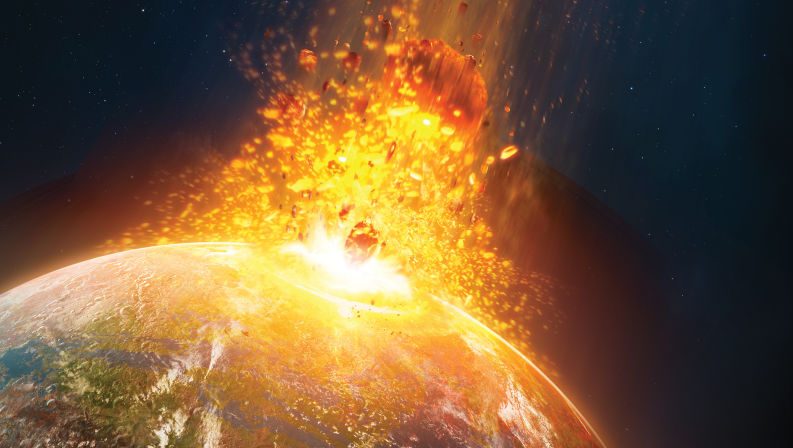
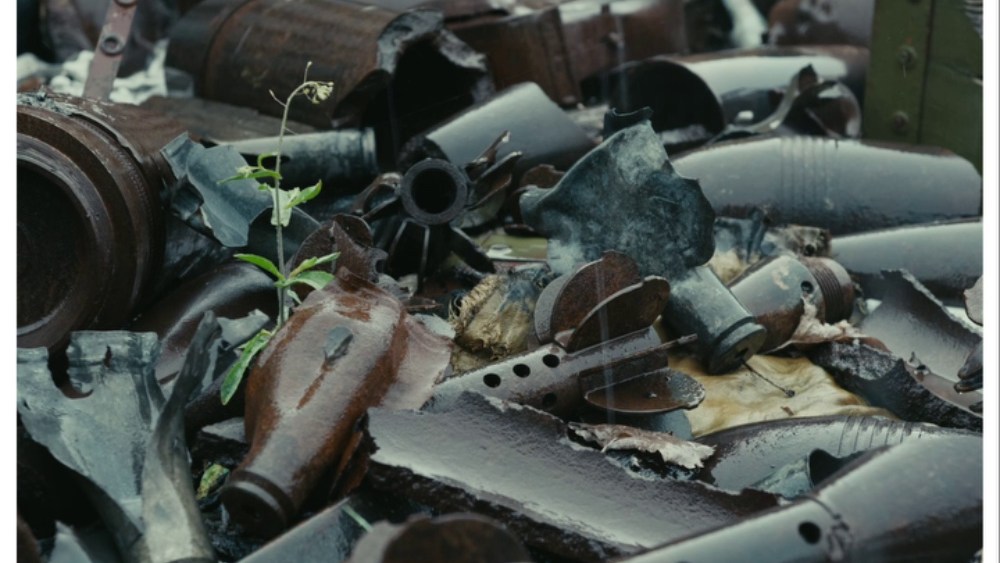
In “Divia,” competing within the Karlovy Fluctuate Movie Pageant’s Crystal Globe Competitors, he reveals the destruction that adopted the Russian invasion of Ukraine. But additionally, the continued risk confronted by the whole Earth.
“All this silence hopefully makes the movie extra common. This manner, there’s more room for interpretation. It simply felt proper,” he states.
Produced by Gogol Movie and UP UA Studio, and co-produced by Valk Productions, it was made with the assist of the Polish Movie Institute.
Chatting with Selection from Ukraine’s Uzhgorod, Hreshko stresses: “We have been attempting to ensure it’s not boring. These experimental, slower movies can get tiring; we wished to take folks, and by that I additionally imply the common viewers, on a journey they might really wish to comply with till the top. It’s a meditation.”
One which was made a lot simpler by Grammy-winning composer Sam Slater, who additionally joined the group.
“He tuned himself to the vibrations of the panorama: the mud of the bottom, the wind, the grief within the air. Sitting collectively in his studio, we might say: ‘Right here, we’d like Sartre’s ‘Nausea’ and there, the triumph of nature, quietly protecting the corpses of Russian troopers with grass,” recollects Lukianets.
Slater, who’s labored on “Joker” and “Chernobyl,” can be behind the rating for harrowing “2000 Meters to Andriivka.”
Hreshko provides: “Sam’s final album, ‘I Do Not Want to Be Referred to as a Vandal,’ matched the concept of ‘Divia’ completely. It has a music referred to as ‘Kintsugi’ after the Japanese artwork of mending damaged issues with a lacquer blended with powdered gold. Within the movie, nature is damaged, too. It would attempt to get better, however it is going to be very totally different from what it was previous to the destruction.”
To recreate the world earlier than the aggression, the group regarded for footage depicting Ukrainian nature in all its glory everywhere in the nation, additionally to point out “what’s liable to being destroyed sooner or later,” he says.
“We’re not simply speaking in regards to the East or the South – it’s all the things we’ve got. We began growing this concept earlier than the full-scale invasion. At first, it had extra to do with how people, and industrialization, have impacted Ukrainian nature. Later, we needed to deal with conflict.”
However he couldn’t enable himself to be impacted by burnt forests, animal corpses and destroyed fields he reveals within the movie.
“I assume it’s the identical for all Ukrainian administrators: we will’t afford to mirror an excessive amount of on all this destruction and tragedy. We’ve constructed this emotional protect, and we are going to stick with it till the top of this conflict. If we might begin considering an excessive amount of, we might get too emotional and lose management. Every week, bombs maintain falling on Kyiv. You see all these homes, together with my very own, fully destroyed. Individuals grieve in these ruins. I’m not proof against this disappointment, however this job and this digital camera give me a ways. They make it simpler.”
Speaking in regards to the ongoing conflict, not simply the movies, is a “cultural mission” for any Ukrainian artist, he says. Even because the business, or folks overseas, develop more and more detached.
“All I can say is thanks. Thanks to all of the folks supporting Ukraine. I can’t actually say: ‘We’d like extra assist.’ I perceive it’s exhausting to maintain desirous about one thing that’s occurring far-off from your private home,” he admits. But it surely’s exhausting to not really feel pissed off at instances.
“At first, I wished to point out nature slowly recovering – similar to we have been recovering, hoping the conflict will finish. Now, we really feel it can proceed perpetually. The conflict comes nearer and nearer once more – threatening all the things on this vicious circle.”
Producer Polina Herman notes: “Divia’ is our third movie with Dmytro, and a very essential challenge – for us, our nation and for the world at massive. It goals to attract everybody’s consideration to what’s occurring in the present day. If we don’t cease the wars and the destruction of nature, we could really should search for methods emigrate to different planets. However even when that ever turns into potential, everyone knows that we will’t escape from ourselves.”

“Divia”
The post Ukrainian Doc ‘Divia’ Takes on Struggle appeared first on Allcelbrities.